


Backyard Baseball '97
3.5295.00 Reviews
App Specs
- Version
- 1.3.22
- Updated On
- License
- $4.99
- Downloads
- 10,000+
- Developer
- Playground Productions LLC
- Categories
- Sports
- Platform
- Android
Screenshots
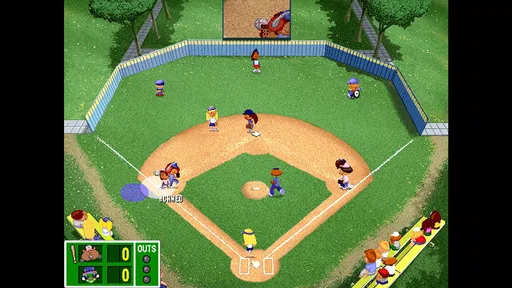
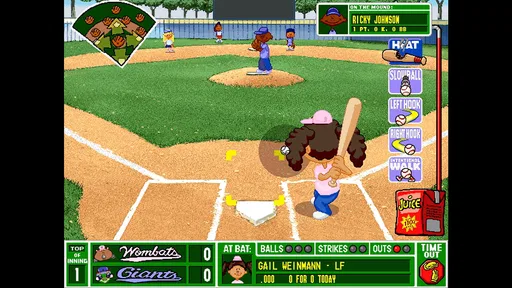
 Analysis by AppCompare
I went into Backyard Baseball '97 expecting a quick nostalgia trip, but I found a sports game that works best when I stop treating it like a modern mobile release. It is a paid recreation of the original Backyard Baseball experience, developed by Playground Productions LLC, and its main appeal is the simple pleasure of putting together a game and playing ball without the clutter that often surrounds newer sports titles.
This is available as a sports game for Android and iOS, carries an Everyone age rating, and costs $4.99. That price changes the way I judge it: I am not looking for an endless stream of updates or a large free-to-play progression system. I am asking whether the core baseball experience is enjoyable enough to revisit, whether the old-school presentation still has personality, and whether the package gives families and returning fans a comfortable way to play.
My answer is generally positive, with an important qualification. The game is most appealing to people who want a compact, characterful baseball experience rather than a deep simulation or a constantly expanding competitive service. If you want a straightforward game with a clear starting point and a recognizable retro identity, it has a lot going for it. If you need modern online features, detailed team management, or a long list of unlocks to chase, this is probably not the right purchase.
How the first games establish their goals
The early goal is refreshingly easy to understand: get into a baseball game, learn how the familiar actions feel, and try to make better decisions from one at-bat to the next. I never felt pushed toward a complicated checklist before I could enjoy myself. The basic rhythm gives each play a purpose, whether I am trying to put the ball in play, time a swing, make a defensive stop, or simply understand how the opposing side reacts.
That simplicity is not the same as a lack of direction. A good opening session naturally creates small targets. I wanted to improve my timing, avoid wasting opportunities, and make smarter choices when the pressure increased. These are personal goals rather than a large collection of visible missions, and that distinction matters. The game encourages me to play better through the baseball itself, not by placing a reward icon over every action.
For a child or a casual player, this makes the opening approachable. The Everyone rating fits the friendly tone, and the rules are easier to grasp than those of a full simulation. A parent could hand it to a young player who already understands the basic idea of baseball and expect the first session to be about learning through play rather than studying menus.
For a returning fan, the first few minutes serve a different purpose. They are a test of whether the original style still feels inviting. I noticed that the charm comes from the game’s personality and directness, not from visual excess. It does not need to bury the player in presentation to make a simple inning feel meaningful.
Worth Reading Before You Choose

EA SPORTS FC Mobile 26 Is a Bigger Football Game, but It Takes Time

Flipboard Shows What News Apps Must Do Beyond the Feed

Switching to Android Auto Means Rethinking Your Driving Routine

Google Calendar Makes a Crowded Week Easier to Manage

Ludo King Makes the Most of the Minutes Between Plans

Baby Panda World Brings Quick Play to Modern Phones, but Its Game Library Feels Busy
Why the early loop remains approachable
The most useful way to approach it is to treat each game as a short practice in decision-making. Instead of rushing to finish, I found more value in watching what caused a failed play. Was my timing poor? Did I choose the wrong moment to take a risk? Did I react too slowly on defense? Thinking this way turns a basic match into a series of manageable lessons.
That approach also helps explain who will enjoy the game most. Someone looking for a relaxed baseball title can play without needing to master a huge control scheme. Someone who wants a serious simulation may find the same accessibility limiting, because the appeal is built around immediacy rather than exhaustive realism.
One practical tip is to give the first session enough time to establish a rhythm instead of judging it after a single awkward inning. Retro sports games can feel different from current touch-first releases, especially when the player is adjusting to timing and movement. Once I stopped comparing every action with modern baseball games, the straightforward structure became one of its strengths.
What counts as progress when there is no grind to lean on
The game’s progress is best understood through improving performance and becoming more comfortable with its flow. I did not approach it as a role-playing game filled with upgrades. The satisfying signals are smaller: recognizing a situation faster, making fewer careless mistakes, and feeling that a close game is being shaped by my choices rather than by random button pressing.
This is an important trade-off. Modern mobile sports games often use currencies, card collections, daily tasks, or layered team-building systems to keep players returning. Those systems can provide a strong sense of accumulation, but they can also distract from the sport. Here, the incentive is closer to replaying a favorite board game or returning to a familiar local field: the rules stay recognizable, while my own understanding improves.
That style of progression suits short sessions particularly well. If I have a spare stretch of time, I can focus on one game and still feel that the session had a clear beginning and end. I do not need to manage a roster outside the match or remember a long chain of objectives. The trade-off is that players who measure value by the number of unlocks, collectibles, or permanent upgrades may decide that the experience runs out of visible milestones too soon.
For me, the strongest progress signal is the change in how I read a play. Early on, I was simply trying to respond. Later, I was thinking ahead, anticipating the next opportunity, and treating mistakes as information. That kind of improvement is easy to overlook because it is not always displayed as a reward, but it is exactly what keeps a simple sports game from becoming disposable.
A useful way to build your own goals
Because the game does not need to carry the entire retention burden with a large progression ladder, I recommend setting a small focus before each session. One game can be about cleaner batting decisions; another can be about defensive awareness; a later match can be about staying patient when the score is close. This gives the familiar structure a fresh angle without pretending that it contains a deep upgrade economy.
This also makes it easier to share with another person. A new player can concentrate on learning the basic rhythm, while an experienced player can set a more demanding personal target. The same match can therefore serve as an introduction for a child, a relaxed nostalgia session for an adult, or a friendly test between people who already know the game.
I would not recommend buying it solely because you expect a long-term account-building journey. The satisfaction comes from replaying the baseball, not from watching a virtual collection grow. That is not a flaw by itself, but it should be clear before spending money.
Difficulty, pacing, and the point where nostalgia meets friction
The difficulty curve feels more personal than system-driven. The opening is easy to understand, but playing well still requires attention. As I became more familiar with the rhythm, the challenge shifted away from learning what to do and toward doing it consistently under pressure. That is a healthy curve for this kind of game because it lets beginners participate while giving experienced players a reason to refine their timing.
At the same time, the curve may not satisfy everyone. Players accustomed to highly adjustable modern sports games may want more explicit control over difficulty, deeper tactical options, or a broader range of competitive situations. The original design’s directness is part of its identity, but it also means there is less room to tailor the experience to very specific preferences.
Pacing is one of the better reasons to choose this over a larger baseball simulation. I never felt that I had to prepare for a match through a long management phase. The action is the point, and the game’s compact structure makes it suitable for a quick break or a shared session at home. It is also easier to return to after a few days away because the central idea remains familiar.
A realistic everyday use case would be a family looking for something to play together after dinner. One person can take the game seriously, another can enjoy the characters and old-school tone, and a younger player can learn the basics without facing the intimidating layers found in professional baseball simulations. The experience is not built around a marathon commitment, so it fits naturally into a short shared activity.
There is some friction in that same simplicity. If I want a richer sense of a season, extensive customization, or the realism of a licensed professional league, I would choose a different sports game. This is not the title I would use to replace a full baseball simulator. It is better viewed as a focused, nostalgic alternative that values accessibility and personality over breadth.
How it compares with common baseball alternatives
Compared with free-to-play baseball games, this release has a clearer relationship with the player. Paying $4.99 up front makes the experience feel more like a complete purchase than an ongoing system designed around repeated spending or constant engagement. That does not automatically make it better, but it is a meaningful advantage for anyone who dislikes monetization pressure and wants to start playing immediately.
Compared with large console-style baseball simulations, it is much less demanding. Those games are the better choice when realism, professional teams, detailed statistics, and long-term management are the priority. Backyard Baseball '97 is the better fit when I want a lighter game with a distinctive identity and a smaller learning burden.
Compared with other retro re-releases, its value depends heavily on whether the original baseball style appeals to me. Nostalgia is not enough if I dislike the underlying sport or expect modern presentation standards. However, when the goal is to revisit a familiar kind of backyard competition, the focused design feels more honest than a remake that adds layers simply to appear current.
What keeps the game coming back—and what may not
The strongest retention pressure comes from the desire to play one more game better than the last. A close result, a missed opportunity, or a defensive mistake can make me want to try again while the lesson is still fresh. That is a healthy loop because it is connected to the sport rather than to an artificial timer or a reward schedule.
There is also a social kind of retention. The game is easy to imagine as a shared activity, especially for people who remember the original or want to introduce its style to a younger player. A simple ruleset lowers the barrier to passing the device around, and the friendly tone makes it less intimidating than a serious simulation.
Still, the replay value has a ceiling for players who need constant novelty. Without a strong focus on collecting, unlocking, or expanding a persistent profile, the game depends on the pleasure of repeating its central activity. That can be excellent for a sports fan who enjoys mastery, but less compelling for someone who moves on as soon as the first surprise fades.
My advice is to decide what kind of return you want. If you want to revisit a favorite style, sharpen your play, and enjoy self-contained matches, the structure supports that well. If you want a daily checklist, a large competitive ladder, or a stream of new content, you should look elsewhere rather than expecting this release to behave like a modern live-service game.
Who should buy it now
I would recommend it to fans of the original, families seeking an approachable baseball game, and players who prefer paying once for a focused experience. It is also a good choice for someone who finds professional baseball simulations too dense but still wants more substance than a very basic arcade mini-game.
I would skip it if your main reason for playing sports games is realism, online competition, deep team management, or a constant flow of unlocks. The price is modest compared with many larger games, but it is still worth matching the purchase to your expectations. A nostalgic presentation cannot substitute for features that were never the point of the design.
The technical entry point is broad: the game supports Android devices running version 7.0 or later. Its current version is 1.3.22, so I would check that a device meets the operating-system requirement before purchasing, especially if it is an older phone or tablet. The release arrived on March 5, 2025, and the store presence has already attracted over ten thousand installs, with a 3.5 average from around five hundred ratings. Those figures suggest a recognizable but still relatively focused audience rather than a universal hit.
My progression verdict
Backyard Baseball '97 succeeds when its goals stay small and meaningful. I play to improve a decision, handle the next situation better, and enjoy the personality of a classic backyard match. The progress is not about building an enormous digital empire; it is about becoming more comfortable with the game and finding reasons to replay it.
That makes the experience pleasantly resistant to modern clutter. There is no need to turn every session into a chore list, and the paid model supports a more straightforward relationship with the game. In exchange, I have to accept that the visible progression is limited and that the long-term challenge depends on my own interest in baseball rather than a large chain of rewards.
For me, that is a fair trade. The game feels most successful as a compact sports experience with a strong retro identity, not as a replacement for a current baseball simulation. Playground Productions LLC has a release here that is easy to recommend to the right person: someone who wants approachable play, familiar charm, and matches that can be enjoyed without a major time commitment.
My final recommendation is simple: buy it for the focused baseball loop and the chance to revisit a distinctive classic, not for deep unlocks or endless progression. If that sounds like the kind of sports game you have been looking for, the $4.99 purchase is easy to justify. If you need modern competitive features or a constantly expanding system, your money will be better spent on a fuller alternative.
Pros
- Faithfully recreates the charm of the classic Backyard Baseball experience.
- Simple controls make it approachable for younger and casual players.
- Distinct child characters give matches plenty of personality.
- Quick games work well for short mobile play sessions.
- Nostalgic presentation appeals strongly to fans of 1990s sports games.
Cons
- Limited modern features may feel sparse compared with current sports games.
- The retro visuals and interface can look dated on newer devices.
- Gameplay variety is restricted once the novelty of the roster fades.
- Some players may find the pace slower than contemporary baseball titles.
- Availability and device support may vary depending on platform and region.
FAQs for Backyard Baseball '97
What is Backyard Baseball ’97?
Backyard Baseball ’97 is a remastered version of the classic family-friendly baseball game originally released in the late 1990s. It combines simple arcade-style gameplay with humorous characters, colorful visuals, and easy-to-learn controls. You can create a team, choose from memorable Backyard Sports players, and play baseball without needing advanced knowledge of the sport.
Is Backyard Baseball ’97 suitable for children and beginners?
Yes. The game is designed to be approachable for younger players and casual gamers. Its controls are much simpler than those found in realistic baseball simulations, while the cartoon presentation keeps the experience lighthearted. That said, younger children may still need help understanding menus, game rules, or device controls, depending on their age and previous experience with sports games.
What gameplay modes and features does the game include?
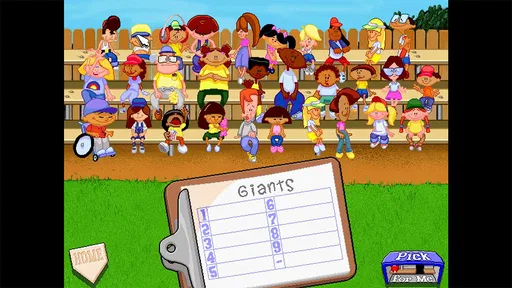
Backyard Baseball ’97 focuses on classic baseball matches with a playful, arcade-like presentation. Players can select characters, build a lineup, and compete in games using straightforward batting, pitching, and fielding mechanics. The main appeal is the cast of recognizable child athletes and the nostalgic atmosphere, rather than a deep franchise-management system or highly realistic professional baseball simulation.
Does Backyard Baseball ’97 require an internet connection or include in-app purchases?
The exact requirements can depend on the platform version and how the publisher distributes the game. Before downloading, check the official store listing for information about offline play, account requirements, advertisements, and in-app purchases. A version may support much of its gameplay offline, but updates, cloud features, or certain services could still require an internet connection.
Which devices support Backyard Baseball ’97, and is it worth downloading?
Compatibility depends on the official release, so you should review the listed Android or iOS requirements before installing. The game is especially appealing to players who remember the original and want a convenient modern version of its cheerful baseball gameplay. It may be less suitable for users seeking realistic physics, licensed professional teams, or extensive online multiplayer features.


